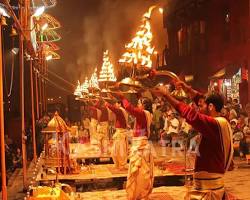
It is a daily ritual of worshipping the sacred Ganga River, who is revered as a goddess, a mother, and a purifier.
Here are the key details:
🌟 Most Famous Location and Time
| Location | Timing (Approximate) | Best for |
| Dashashwamedh Ghat | Evening Aarti | The Grandest Spectacle |
| Winter: 6:00 PM – 6:45 PM | Attracts the largest crowds, features multiple priests in synchronized movements with large brass lamps (deepams). | |
| Summer: 7:00 PM – 7:45 PM | ||
| Assi Ghat | Morning Aarti (Subah-e-Banaras) | Quiet, Spiritual, and Peaceful |
| Winter: 5:30 AM | Often includes Vedic chants, yoga, and classical music before the aarti. | |
| Summer: 5:00 AM |
Export to Sheets
🕉️ Spiritual Significance
The Ganga Aarti is an act of deep reverence and gratitude towards the Mother Ganga. It symbolizes:
- Worship of the Panch Tattvas: The ritual uses fire (lamps), water (Ganga), earth (flowers/incense), air (incense/conch shells), and space (the open ghat).
- Purification: Witnessing the aarti is believed to cleanse the soul and bring blessings.
- Eternal Bond: It showcases the timeless spiritual connection between the people of Kashi (Varanasi) and the river that sustains life.
💡 Tips for Viewing the Evening Aarti
- Arrive Early: For the Dashashwamedh Ghat aarti, arrive at least 45 minutes to 1 hour early (around 5:00 PM in winter or 6:00 PM in summer) to secure a good spot on the ghat steps.
- Best Viewpoints:
- The Ghat Steps: Free and offers an immersive experience, but can be very crowded.
- A Boat on the River: Offers a panoramic, unobstructed, and slightly less crowded view of the entire ceremony. You can hire a boat directly at the ghat.
- Rooftops: Some nearby buildings/shops offer paid rooftop viewing spots.
Note: The timings change slightly with the season as the ceremony begins shortly after sunset. It’s always a good idea to confirm the exact time locally.
Would you like to know more about the morning aarti at Assi Ghat or perhaps how to get to Dashashwamedh Ghat?